
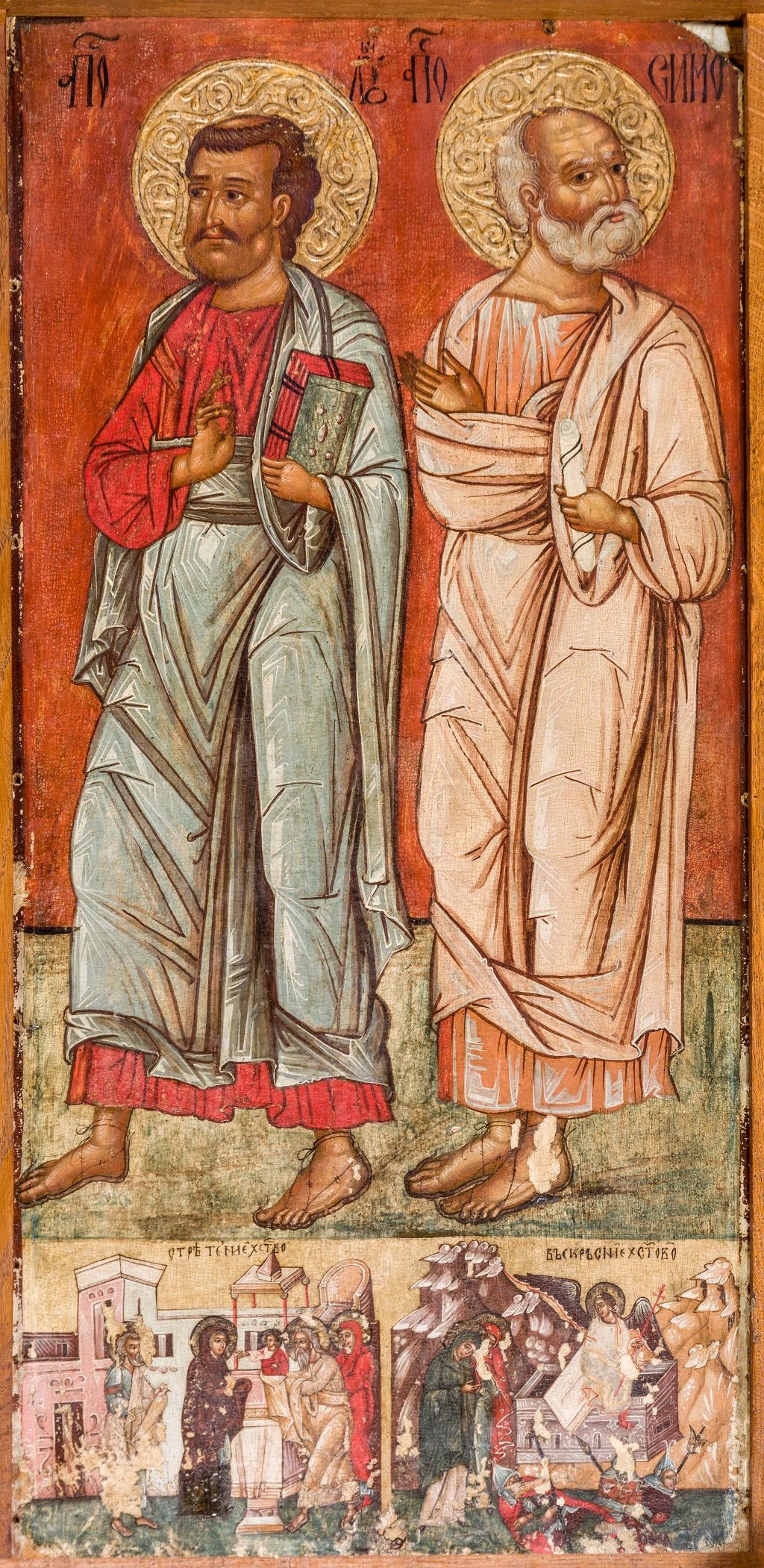
Name: icon "Luke the Evangelist and Simon the Apostle; Presentation of Jesus and Resurrection"
Author: unknown
Date: mid 16th century
Country: Ukraine
Technique/material: tempera and silver gilt on panel
The icon is part of the iconostasis exhibited in the museum "Stara Skvaryava iconostasis of the XVI-XVIII centuries"
Description:
During one of the interventions in the iconostasis, when they were making additions or changes, this icon was swapped with the following icon in the tier – the apostle Paul and the evangelist Matthew. Since it was essential to maintain hierarchy in the Apostolic tier, with the most important figures closer to the center, after John the Baptist, the Virgin Mary, and the archangels, they depicted the chief apostles Peter and Paul, followed by the evangelists and then other apostles, whose order could vary slightly. The sequence was always concluded with the youngest, Thomas and Philip.
In Ukrainian iconography of the 15th to 16th centuries, the Evangelist Luke was often depicted with a short beard and a tonsure, along with the typical attribute of an Evangelist - a book. Simon was frequently depicted as an older man with a gray beard, short gray hair, tall stature, and receding hairline.
The Presentation of the Lord icon represents the Gospel event when Mary and Joseph, on the fortieth day after the birth of their firstborn, brought him to the Jerusalem Temple according to Jewish custom. A crucial aspect of this event is the encounter with the elder Simeon, who had been waiting for years to meet the Messiah, as he had been promised. Another figure present with Simeon is the prophetess Anna, who, after encountering the Child Jesus, proclaimed the coming of the Messiah.
The icon of the “Myrrh-Bearing Women at the Tomb of the Lord” portrays an event from the Gospels related to the Passion and Resurrection of Jesus. In iconography, along with the Harrowing of Hell and the Resurrection of the Lord, it is considered one of the depictions of the actual Resurrection event. The Myrrh-Bearing Women were the first to receive the news from an angel that Jesus had risen from the dead. The icon typically features two female figures (although their number could vary from two to five or even more), an angel standing on the sarcophagus (tomb) with the lid pushed aside, who is pointing to the empty tomb, and three sleeping soldiers near the tomb.
The description was prepared by Roman Zilinko, art historian, icon painter