
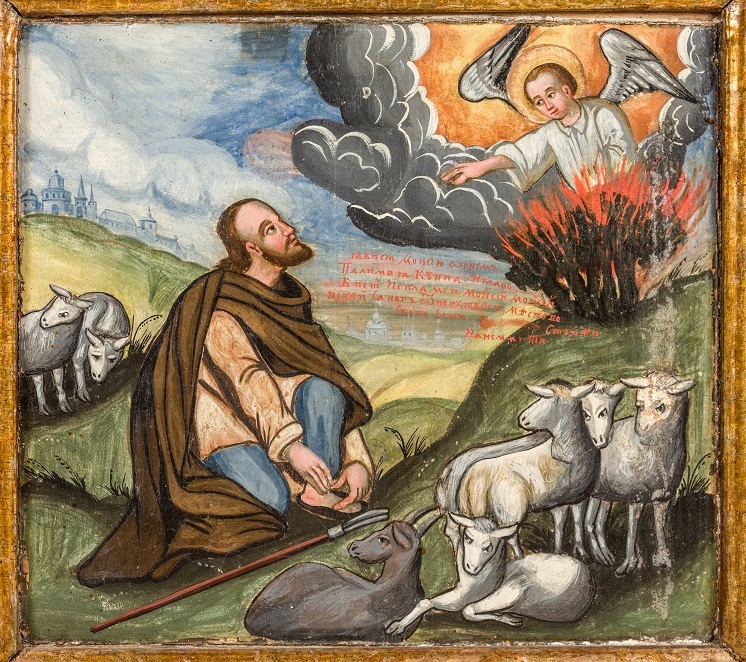
Name: predella “Moses and the Burning Bush”
Author: Ivan Rutkovych (?)
Date: 1685
Country: Ukraine
Technique/material: tempera and silver gilt on panel
The predella is part of the iconostasis exhibited in the museum "Stara Skvaryava iconostasis of the XVI-XVIII centuries"
Description:
From the beginning of the 17th century, predellas started to appear in Ukrainian iconostases, initially featuring ornamental designs and later including figurative scenes from the Holy Scriptures or the lives of saints. Predellas didn’t form an independent horizontal row within the iconostasis like other icons but rather served as complements to the Sovereign tier. The subjects depicted on predellas symbolically or narratively extended what was shown on the central icons. This is the situation we have in the iconostasis from Stara Skvaryava.
Beneath the icon of the Virgin Mary, there is an image of Moses near the burning bush. In the Old Testament Book of Exodus, there is a story about God appearing to Moses in the form of a burning bush, which is referred to as the “unburnt bush”. During this vision, God spoke to Moses, instructing him to remove his sandals because the place was holy. In that moment, God revealed Moses’ mission to lead his people out of Egypt. In Christianity, the symbol of the unconsumed burning bush was transferred to the Virgin Mary, who, while carrying Jesus in her womb, remained untouched by the divine fire of his divinity. This is why in religious texts, poetry, and icons, Mary is often compared to and represented as the Burning Bush.
The iconography of this subject has Western origins. From the 16th century, in major European printing centres, especially in German-speaking lands, Italy, and most notably in the Netherlands, illustrated Bibles and collections of engravings on themes from the Holy Scriptures were printed in large numbers. These publications were distributed worldwide through missionaries and traders and were often used as templates by local artists. Ukrainian artists also drew extensively from these collections, including Ivan Rutkovych and artists from his circle, who actively incorporated engravings produced by Dutch printers into their work.
The icon features an inscription with a quote from the Book of Exodus, explaining the composition. However, there is no date or foundational text present on the icon. Nevertheless, the date “August 20, 1685”, is indicated on the neighboring predella depicting the Giving of the Keys to St. Peter. These icons undoubtedly belong to the same master and were likely executed simultaneously, so they can be dated to the same period.
The description was prepared by Roman Zilinko, art historian, icon painter