
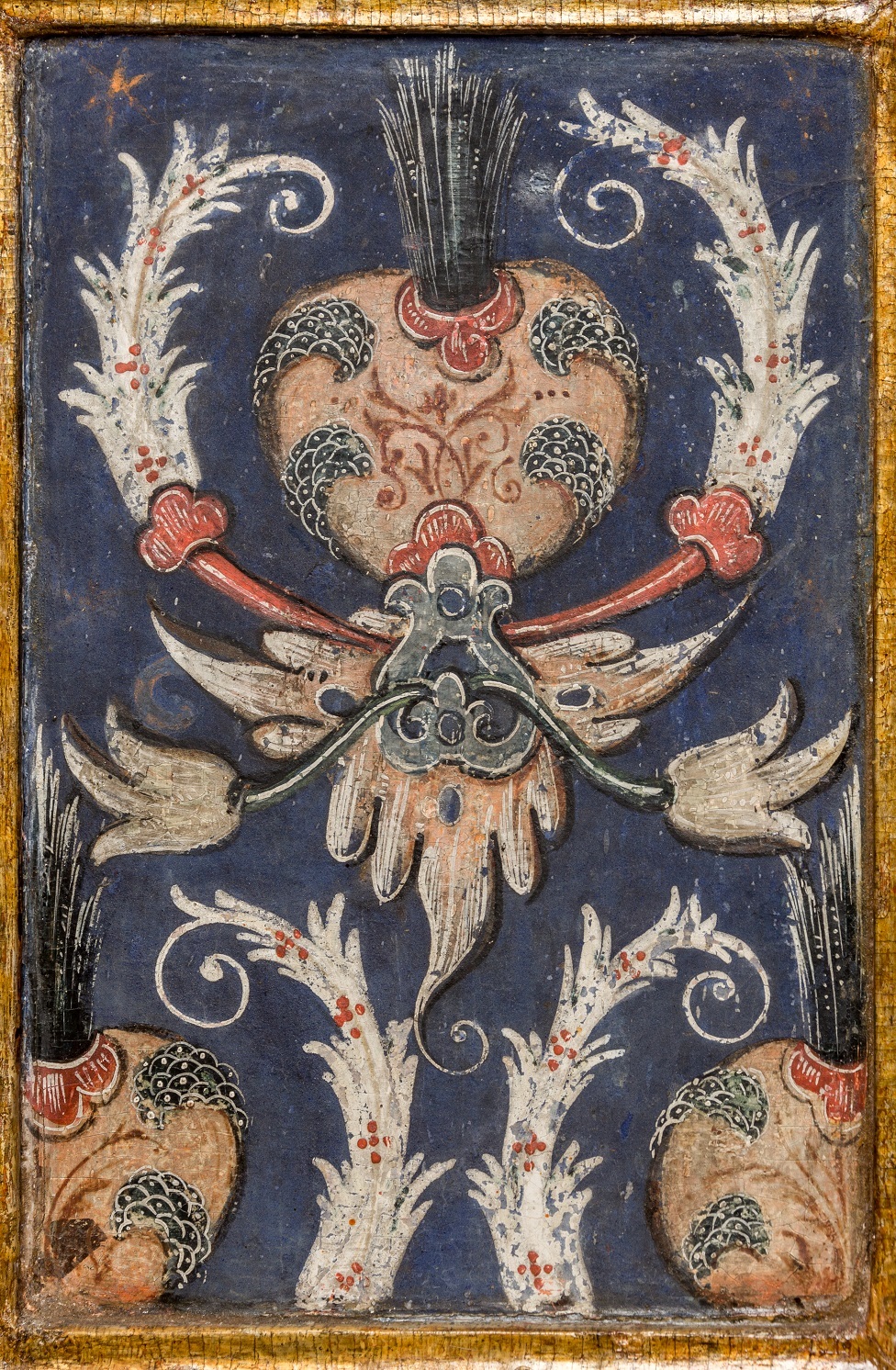
Name: ornamental predella of the icon of St. Nicholas
Author: Ivan Rutkovych (?)
Date: 1687
Country: Ukraine
Technique/material: tempera and silver gilt on panel
The predella is part of the iconostasis exhibited in the museum "Stara Skvaryava iconostasis of the XVI-XVIII centuries"
Description:
In early iconostases, icons of the Sovereign tier were directly attached to the wall or placed between columns or on pillars of pre-altar partition. Decorative fabrics were hung beneath the icons. By the 17th century, when Western artistic influences became more pronounced, the icons of the Sovereign tier were placed in elaborately carved and gilded frames on socles that imitated Roman Catholic altars. The socle itself is also called “predella” (from Italian, meaning “step”). Following Western tradition, ornamental designs began to appear on predellas from the early 17th century onwards, often imitating richly adorned textiles. Later, figurative images were also incorporated. The predella in front of the icon of St. Nicholas features a motif with a blossoming pomegranate, which originated in Eastern art. It was frequently depicted on luxurious silk and velvet textiles and later found its way into European art, becoming a common ornamental motif. In Christian art, it gained significance due to its symbolic meaning of the unity of many in one, the unity of all the faithful in God and the Church.
The description was prepared by Roman Zilinko, art historian, icon painter